Kasilof River fishing guide to the 2026 King salmon season.
We break down what’s changed, what to expect on the water, and how to give wild Kings the best chance of survival. Whether you’re a first-time visitor or a familiar face on the peninsula, here’s what you need to know before you go.
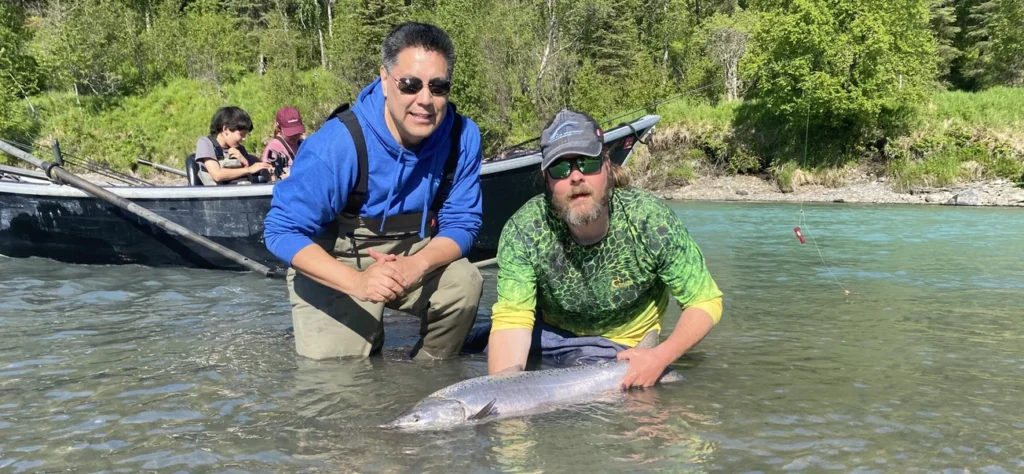
The fishing season has kicked off on the Kenai Peninsula. Guides and locals have geared up and hit the water. Visitors are flying into Anchorage and making the drive toward their favorite rivers.
Many Alaska visitors overlook June entirely. The Kenai River has become world-famous for its massive Sockeye salmon runs, having replaced the incredible King salmon fishing of the past. Times have certainly changed, and we’ve adapted to the fact that King salmon are currently struggling due to a number of factors
While the Kenai River remains closed to sport fishing for King salmon, many of us haven’t slowed down. Instead, we continue to chase dime-bright spring Kings on the Kasilof River, often affectionately referred to as “the ditch.”
A Season Shaped by New Regulations
Fisheries across the United States are constantly evolving. Salmon run timing, fish counts, and biological data all play a role in shaping each season’s regulations. The state recently announced the 2026 Kenai Peninsula regulations, and overall, the news is good.
The Kasilof River remains open for King salmon fishing, though with more restrictions than in recent years. Anglers may still keep a hatchery King salmon, but bait is no longer allowed. All wild Kings go back in the water immediately.

Fishing without bait puts true King salmon skills to the test. Anglers often find just as many, if not more, chances to hook fresh-from-the-ocean Chinook.You might ask yourself: Is fishing still good without bait?
Absolutely.
In many ways, it actually levels the playing field between guides and locals alike. Fishing without bait puts true King salmon skills to the test. Anglers often find just as many, if not more, chances to hook fresh-from-the-ocean Chinook.
For guides like myself, it’s the perfect opportunity to showcase techniques that aren’t used when bait is allowed. This more hands-on approach adds excitement compared to rods baited up and sitting in holders while fish come to the scent.

Some anglers enjoy relaxing in the drift boat waiting for a bite. Others prefer staying busy, drifting gear downstream of the boat or casting into a promising run while actively working the water.
In the fishing world I like to say, “each to their own.” At the end of the day, it’s about the experience and what tickles your fancy. Many anglers are simply on the water to unwind and forget about life off the river, whether it’s for a few days or just a few hours.
Adapting to Challenges on the Water
There’s no denying that King salmon in Alaska are facing challenges. Ocean conditions and human impacts have contributed to declines in recent years. Because of that, anglers and guides alike have had to adapt, changing techniques and adjusting to closures and restrictions. One thing that often gets overlooked, however, is how to properly handle wild King salmon.
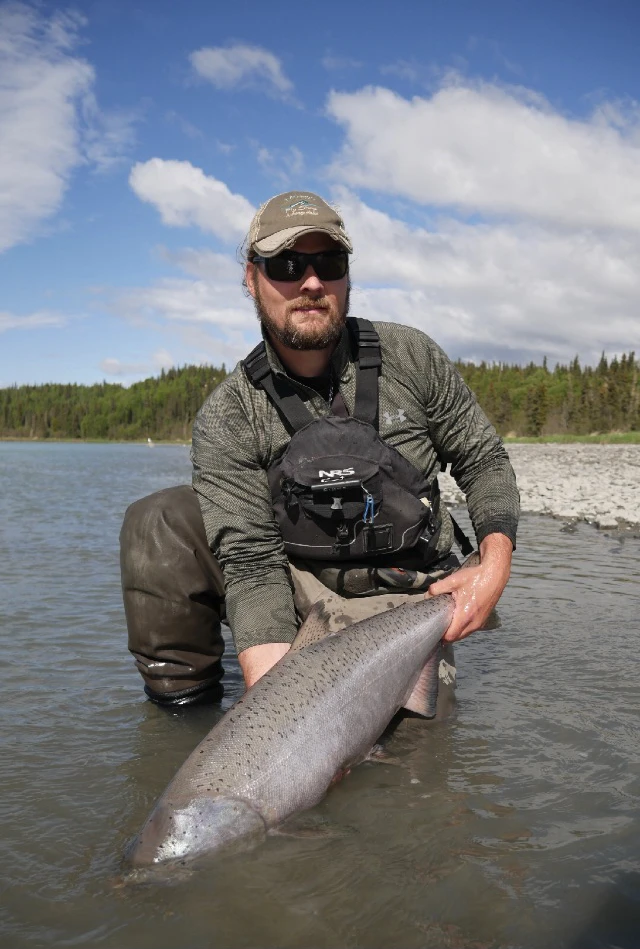
Anglers prize Kings highly, and most want that classic “grip and grin” photo. Proper catch-and-release practices help these fish survive to spawn and support the fishery for future seasons. Your Kasilof River fishing guide will walk you through it on the day, but knowing the basics beforehand helps.
Catch-and-Release: Giving Kings a Fighting Chance
Here are a few simple guidelines that help ensure your Kasilof King swims away strong, hopefully returning to Crooked Creek to spawn or support the hatchery program that keeps this fishery alive.
First: Always have a rubber net in the boat or on the bank. This is one of the most important tools for proper catch-and-release of a King salmon.
Second: Remove gloves (latex gloves are acceptable) and wet your hands before handling the fish.
Both steps help protect the salmon’s slime coat, which is a natural protective barrier against disease, parasites, and bacteria. This mucus layer is essential for the fish’s survival.
Before the high-fives and photos, it is important to have a plan for landing your fish, especially when fishing from a boat.
For a deeper look at proper catch and release fishing techniques and why they matter for the future of the Kasilof River fishery, check out our full article in Fish Alaska Magazine.
There are two main options: take a quick photo from the boat or move to the shoreline before releasing the fish. The best decision depends largely on how long the fish was fought and how tired it appears.
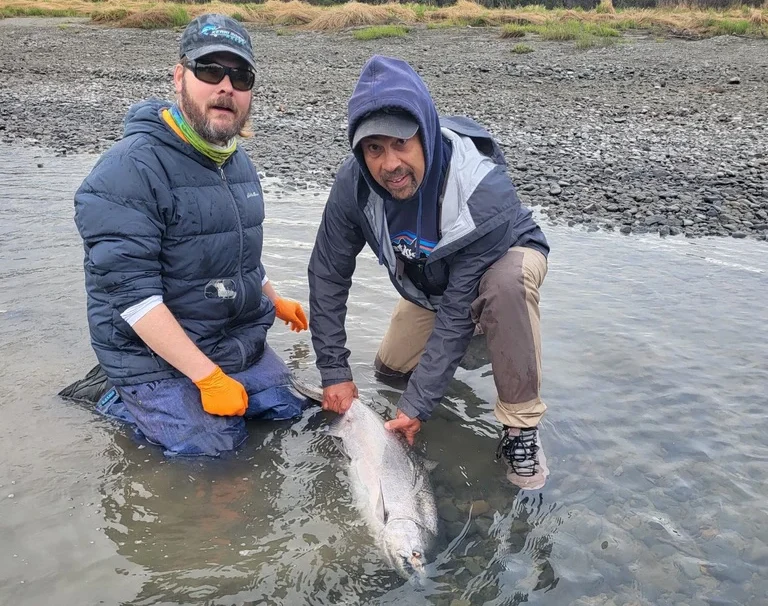
- If the fish is clearly exhausted, the best option is usually to move to shore quickly so you can properly revive it and allow time for recovery before release.
- If the fish was landed quickly and still appears strong, a quick photo beside the boat works well, keeping the head and gills in the water so the fish can breathe.
Sometimes it’s a game-time decision, but it’s a crucial one.
Current regulations require that all wild King salmon remain in the water and be released immediately. These fish deserve our respect, and a simple “head-and-gills-in-the-water” photo shows that you care about the future of the Kasilof River King salmon fishery.
We’d love to see you out here this season. Contact us to book a Kasilof River fishing guide.